From Hyde Park to Sydenham
How a glass and cast iron exhibition hall became a palace on the hill and gave a district its name.
Read the articleAn independent history guide
Crystal Palace is a district in south London, postcode SE19, on Sydenham Hill. It takes its name from the glass and cast iron palace designed by Joseph Paxton, and that connection still shapes the story of the place. We run this site as an independent guide to the history and sights of the area. It contains five articles explaining where the name Crystal Palace came from, what remains of the palace and how to explore the grounds today. We do not list upcoming events, local news or classified ads, because we focus on history and what you can see when you visit.
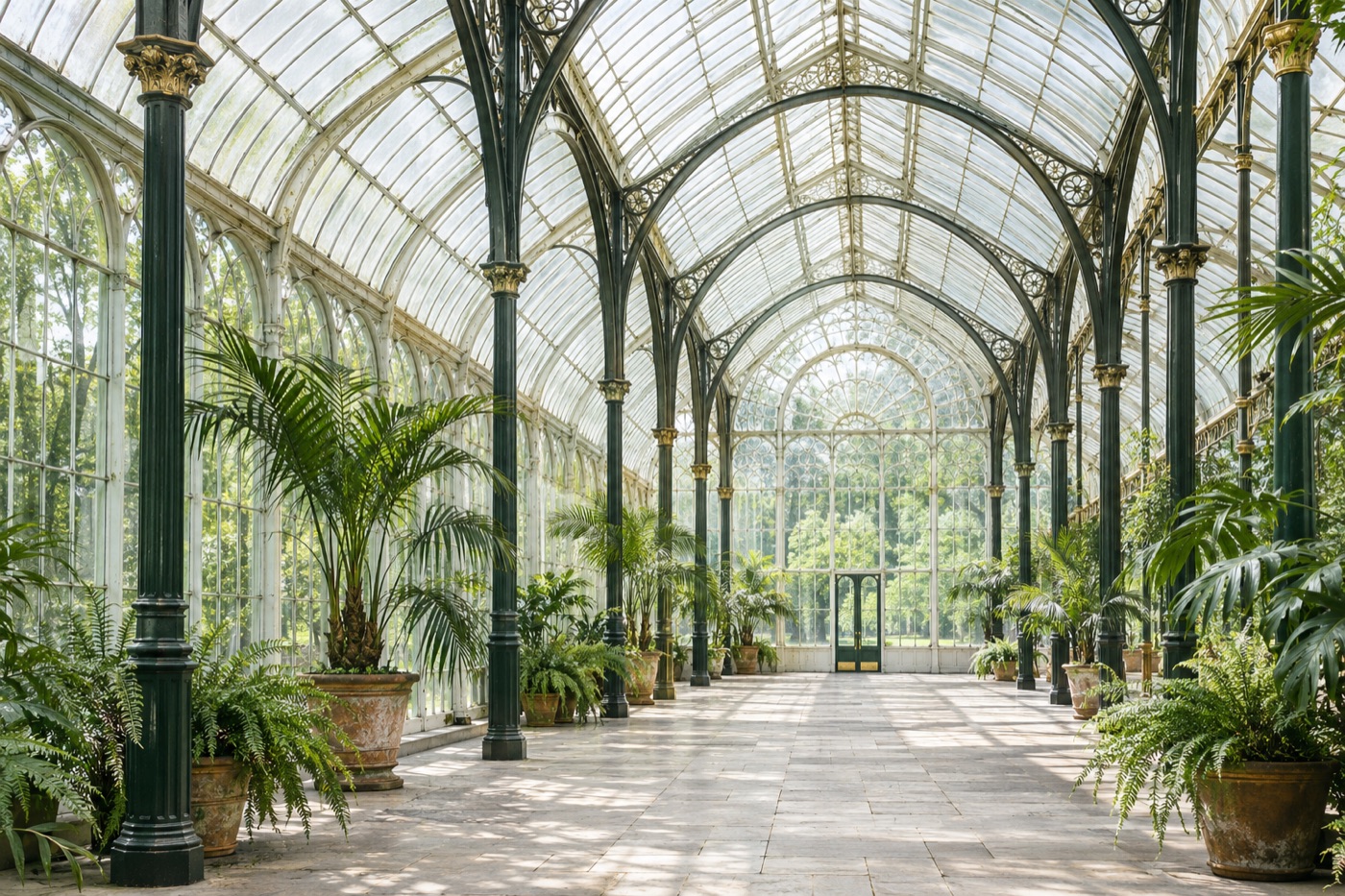
The palace was built in Hyde Park for the Great Exhibition of 1851. When the exhibition ended, it was moved and rebuilt on the hill at Sydenham, where it opened in 1854. The move changed the neighbourhood: the glass and cast iron palace gave its name to the whole district, and Sydenham gained a landmark on the map of London. The first article on this site follows the history of Crystal Palace step by step, from Hyde Park to the hill.
The second article returns to the evening of 30 November 1936, when fire destroyed the palace. Nobody died, and the cause of the fire has never been established beyond doubt. We therefore give a factual account, without speculation unsupported by the sources.
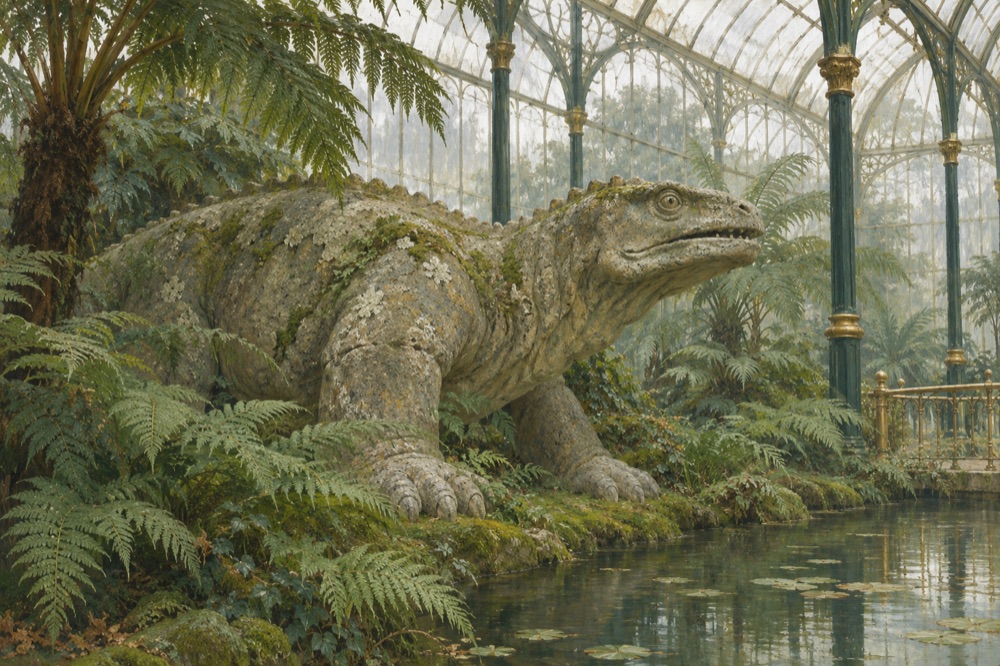
Today, the story is easiest to trace in the park. It contains Victorian sculptures of dinosaurs, made under the direction of Benjamin Waterhouse Hawkins and Richard Owen and unveiled in 1854, the same year the palace opened at Sydenham.
The dinosaur park is one of the reasons to visit the hill, and the third article is devoted to these sculptures and their makers. The fourth article covers the terraces and the architecture. The Italian terraces and the sphinxes are among the best-known remains of the palace. The park itself is listed at Grade II* on the Historic England register of historic parks. The article explains what that designation means for a visitor and which remains merit a closer look.
A tall transmitting mast from the 1950s, about 219 metres high, can be seen from many parts of London. It is one of the most recognisable landmarks in this part of the city, helping you find the hill even when the park is still out of sight.
In the fifth article, you will find practical advice on reaching Sydenham and planning a walk through the park, taking in the dinosaurs and the surrounding area. The route uses the mast as a landmark and links the places described in the other articles. It is a useful guide to read before you set out.
We invite you to explore our guide to Crystal Palace, starting with the history of the palace or whichever article interests you most. You can read them in any order, but together they tell the story of the place: from Hyde Park, through the fire of 1936, the dinosaurs and the terraces, to getting there and exploring on foot.
How a glass and cast iron exhibition hall became a palace on the hill and gave a district its name.
Read the articleWhat is known about the fire of 30 November 1936, the fire brigade and the fate of Brunel's towers.
Read the articleThe life-size sculptures of 1854, their makers and why imperfect science still counts as heritage.
Read the articleWhat remains of the glass palace: the Italian terraces, the sphinxes and the listed park.
Read the articleReaching the hill by rail, the views over London and the transmitting mast as a landmark.
Read the articleOne outside topic is listed below for readers whose interests reach beyond the history of the hill.
is duo boosting bannable league
Duo boosting in League of Legends means playing ranked matches alongside a paid, higher-ranked player, and it raises a recurring question about account safety. Players who weigh paid rank help against the risk of a ban will want to understand how the game's rules treat the practice.