Getting to Crystal Palace without a car: the station, the hill and a walk
Getting to Crystal Palace by rail is simpler than it might seem, as the station is served by two different services. The district stands on Sydenham Hill, and the park, in the borough of Bromley, covers about 200 acres. How can you plan a journey that gets you there without stress? This article covers the journey, the views from the hill and the transmitting mast that can help you find your way.
Crystal Palace station: getting there by rail
Crystal Palace station is served by London Overground and Southern trains. When planning your journey, it helps to understand the routes each service takes. Southern runs on the route from London Bridge to London Victoria, and some trains terminate at Beckenham Junction or West Croydon. It is therefore worth checking a train's destination before you board, as not every service has the same terminus. Overground offers another way to arrive, from the direction of Highbury & Islington.
Crystal Palace has been the southern terminus of that line since 23 May 2010, and today it operates as the Windrush line. Southern trains stop at the same station, so whichever service you choose, you will arrive at the same starting point for the rest of your visit.
The difference between the two options is straightforward. Southern links the station with London Bridge and London Victoria, while Overground connects it with Highbury & Islington. Your choice depends on which part of the city you are travelling from. There are therefore two ways to plan your rail journey to Crystal Palace, and it is best to check current service updates before deciding.
Bear in mind that timetables change and engineering work can affect services. In 2024 the station was closed for a weekend because of track upgrades, so check the latest notices from the operators before you travel.
This takes only a moment and can save you having to change your plans on the platform. This article does not include ticket prices, journey times or timetables, as these details can quickly go out of date.
The hill and the views: a walk through the park
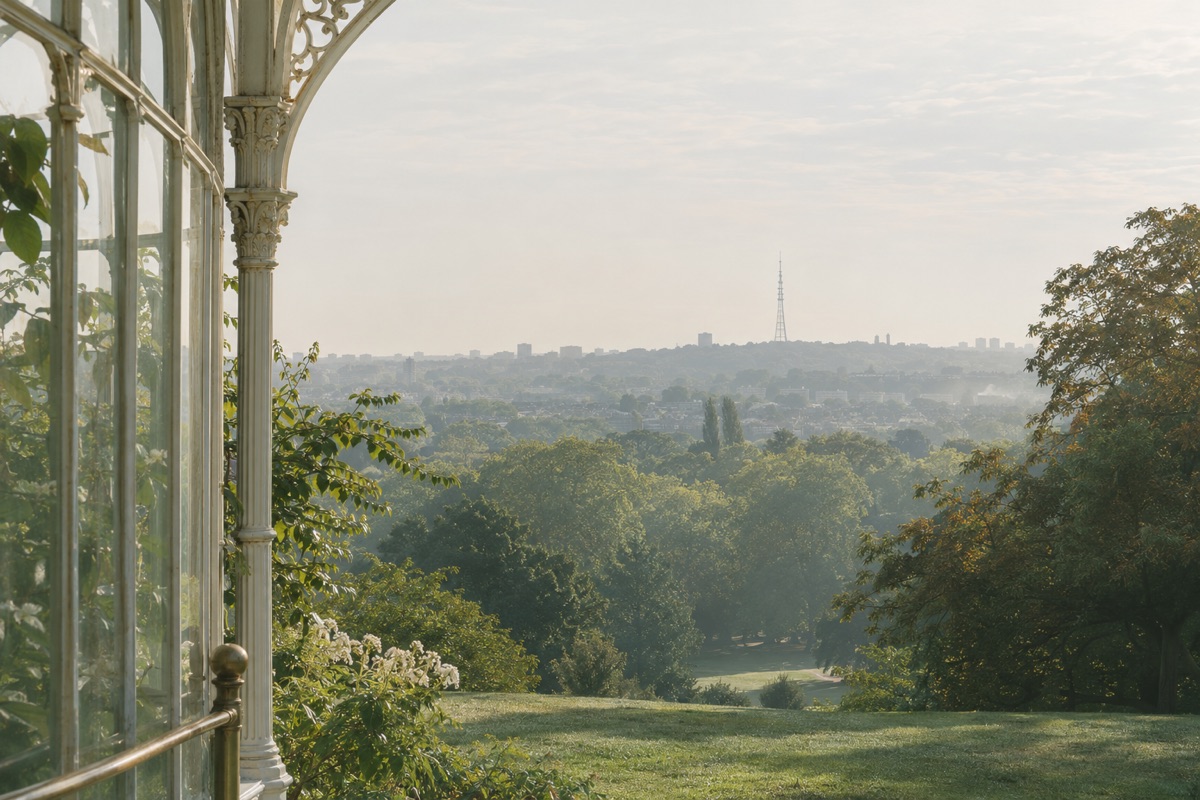
Crystal Palace stands on Sydenham Hill, giving you panoramic views of London from many points in the park. These views are an important feature of the area and part of the pleasure of walking here. The hill gives the district its character, which is particularly apparent wherever the broad panorama opens up. For those arriving by train, the views offer a welcome reward for the journey.
The large park covers about 200 acres and lies in the borough of Bromley. It is best to allow time for a leisurely walk, as a park of this size cannot be explored in just a few minutes. You can adjust the length of your walk to suit the time available, but try to leave yourself enough time at the viewpoints to enjoy the panorama of London without feeling rushed.
The journey and the walk are both part of the visit. Once you arrive at Crystal Palace station, the rest of the day depends on the pace you choose for your walk through the park. We have not included distances from the station to the park or descriptions of particular paths, as we have no confirmed information about these. Before setting out on your walk, consult an up-to-date map of the area.
The transmitting mast as a landmark
The transmitting mast is one of the area's most prominent features. It was built from 1955 to 1956, stands about 219 metres high and was the tallest structure in London until 1991. That was when One Canada Square was completed and took the title.
For anyone exploring on foot, it is a useful landmark. At about 219 metres tall, the mast is easy to spot and can help you get your bearings during a walk through the park. A reference point like this is especially useful when exploring an area of about 200 acres.
The mast is also of historical interest. For more than thirty years it towered over London, and 1991 marked the point when the title passed to a new building. The transmitting mast therefore has two roles: it helps visitors find their way around and stands as a reminder of the area's history in the 1950s.
Summary
Getting to Crystal Palace without a car is straightforward thanks to Overground and Southern trains, which both serve the station. Before you leave, check the latest service updates from the operators. It is also worth allowing time for a walk through the park to enjoy the panorama of London from Sydenham Hill, with the transmitting mast as a useful landmark along the way.