Crystal Palace history: from Hyde Park to Sydenham
The history of Crystal Palace is the story of a building that began as an exhibition hall and earned a permanent place on the map of London. Today the name mostly brings the district to mind, but it first referred to a structure of glass and cast iron in Hyde Park. How could the Crystal Palace building be taken down in one place and put up again in another? The answer lies in its design. This article follows three stages of the story: the exhibition, the name and the move to Sydenham Hill.
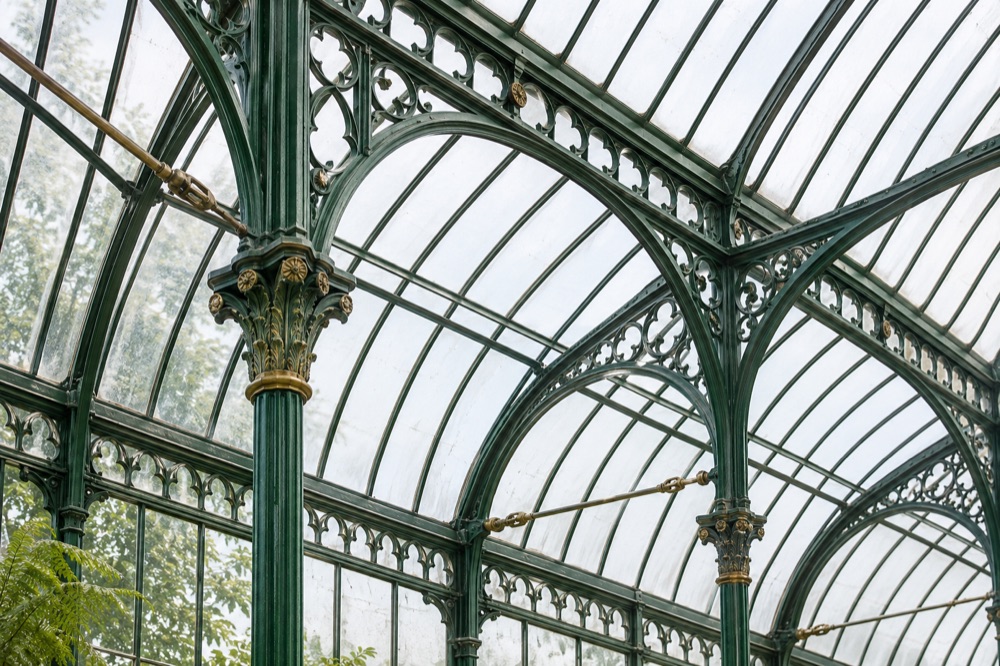
The Great Exhibition of 1851 and Paxton's design
The Great Exhibition ran from 1 May to 15 October 1851 in Hyde Park in London. According to official tallies, it attracted around six million visits. That figure shows the scale of the event, at the centre of which stood a single building. Its designer was Joseph Paxton.
Paxton did not come to the task by chance. He had previously been head gardener to the Duke of Devonshire at Chatsworth in Derbyshire, where he gained the experience with greenhouses that informed the palace's design. The glass hall resembled a huge greenhouse, except that it was intended for visitors rather than plants. That experience is the first key to understanding the origins of the structure.
The decisive factor, though, was the technology. The building consisted of prefabricated cast iron and glass parts, made in advance and simply joined together on site. This meant the Crystal Palace could be assembled in Hyde Park and later taken apart and rebuilt elsewhere. That feature determined the building's later fate: the exhibition had to end, but the building did not have to end with it. This aspect of Joseph Paxton's design best explains everything that followed.
Where does the name Crystal Palace come from?
The name Crystal Palace is credited to Douglas Jerrold, a writer for the satirical magazine Punch. He described the building as a palace made of pure crystal. The words were meant as a joke, but they became so firmly associated with the glass building that people began to use them as its name.
Consider how far that phrase travelled. A satirical comment became an everyday name and outlived the exhibition itself. Years later, the district adopted the name too, as the next section explains. The history of Crystal Palace shows how a single sentence in a newspaper can determine a place's name. It is also an example of a building's name taking on a life of its own, wherever the building stands.
Where did the palace go after the exhibition?
When the exhibition closed, the building was dismantled in Hyde Park and rebuilt on the hill known as Penge Peak, next to Sydenham Hill. It was a prosperous district of large villas in the south of London. The hill made the palace visible across much of south London, turning the building into a landmark that could be seen from afar. Sydenham Hill served as a natural plinth for the glass structure.
Sources give different dates for the move itself. Work began in 1852 or 1853, and the palace at Sydenham was opened by Queen Victoria on 10 June 1854. The opening date is certain and provides a fixed point in the chronology.
The new site was more than just the building. A park with fountains was laid out around the palace. Water for the fountains was intended to come from water towers designed by Isambard Kingdom Brunel. Work on the towers began in August 1854, after the opening, so the park continued to develop while the palace was in use. This is a useful detail for anyone trying to put events in order, as the palace and its surroundings were not created at the same time.
Finally, we return to the name. The district of Crystal Palace took its name from the palace that stood on the hill at Sydenham. A place once known as an area of villas came to be associated with a single building. In this way, the temporary hall from Hyde Park left its mark on London's place names, a mark still visible on the map today.
Summary
The history of Crystal Palace brings together three threads: Joseph Paxton's design for the Great Exhibition of 1851, the name given by the Punch satirist and the building's move to Sydenham Hill. The prefabricated structure of cast iron and glass allowed the building to outlast the exhibition, and the hill at Sydenham gave it a new home where it could be seen from afar. The district that still bears its name is the most lasting trace of this story. Take another look at the map of London: behind many names, you will find stories as unexpected as this one.